The Aesthetic of Mirror-Like Facades
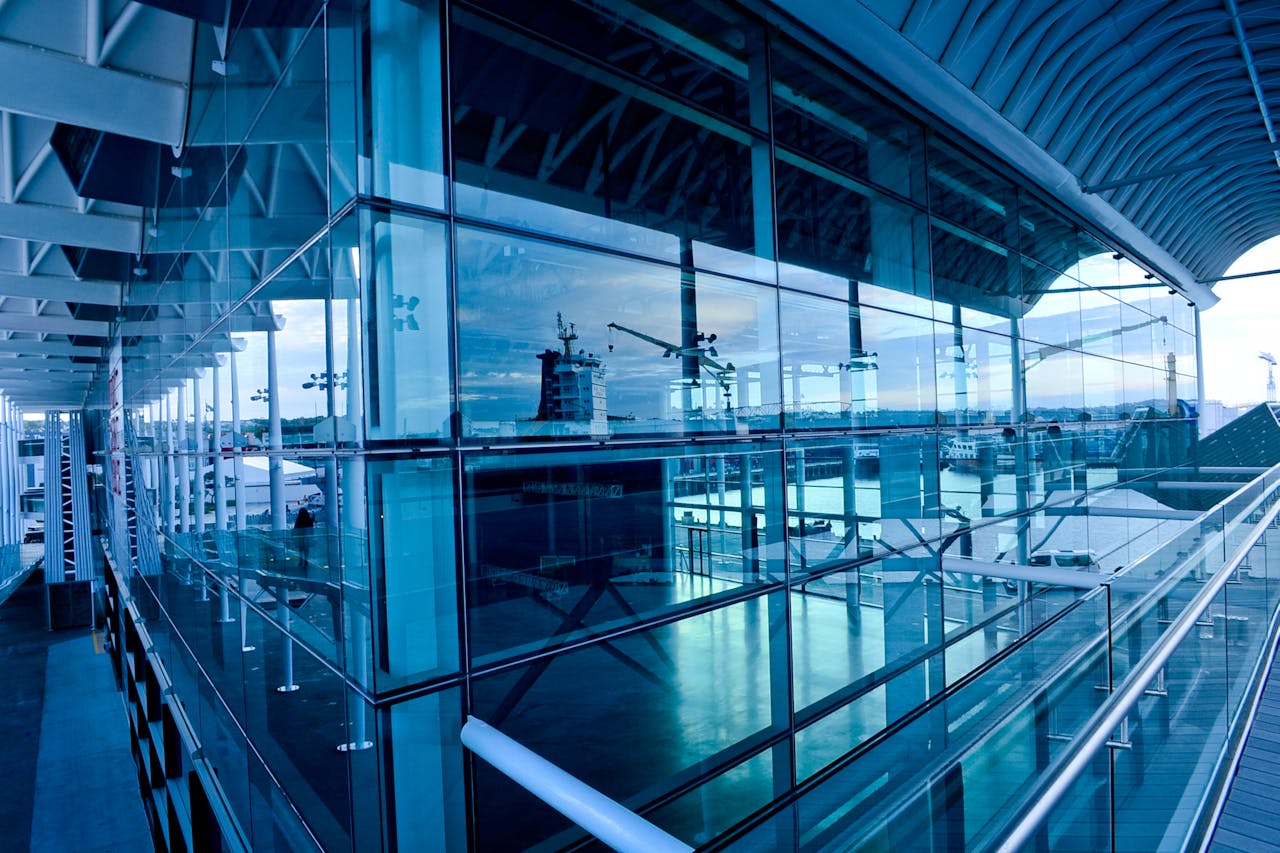
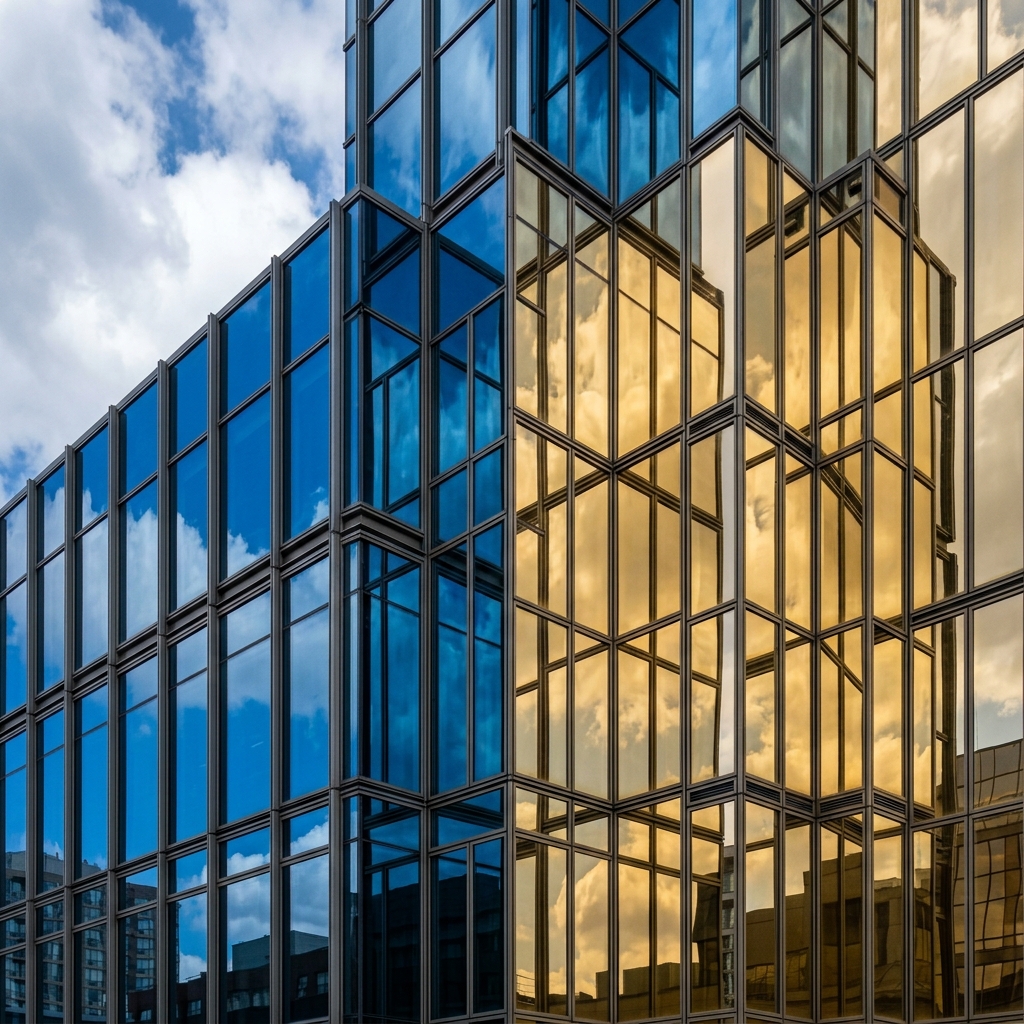
Walk through any major corporate business park, and you will be greeted by towering, mirror-like structures reflecting the sky and clouds. This striking architectural aesthetic is achieved using **reflective glass**.
However, reflective glass is far more than an artistic styling choice. In modern commercial structures with large window-to-wall ratios, solar management is crucial. Without reflective elements, the greenhouse effect inside office floors would make the building uninhabitable and require expensive cooling loads.
"By reflecting infrared heat radiation while transmitting controlled visible light, reflective coatings reduce solar heat intake by up to 60%, drastically cutting building operating costs."
How Metallic Sputter Coating Works
The reflective properties are created by applying a microscopic layer of metal or metal oxide onto the glass surface. There are two primary manufacturing methods:
- Pyrolytic (Online) Coating: The metallic coating is applied while the float glass is still hot in the tin bath, fusing the metal directly to the glass. This creates a highly durable, "hard coat" that can be easily handled, cut, and tempered.
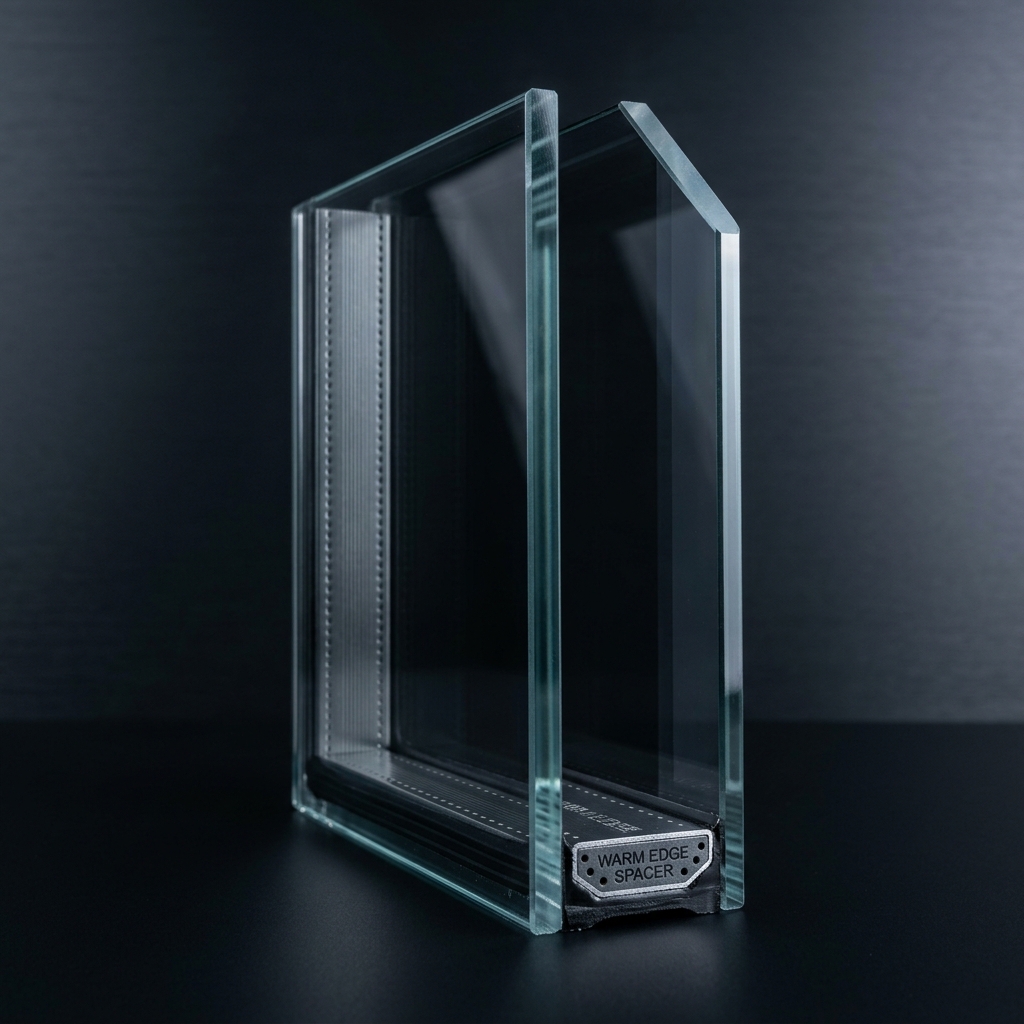
- Sputter (Offline) Coating: The finished glass is placed in a vacuum chamber where metal particles are electromagnetically deposited onto the glass. This "soft coat" offers superior thermal efficiency but is delicate and must be protected inside a Double Glazed Unit (DGU).
The Physics of the Solar Factor
Reflective glass is rated by its Solar Factor or Solar Heat Gain Coefficient (SHGC). An SHGC of 0.35 means only 35% of the sun's heat energy penetrates the glass, while the remaining 65% is reflected or absorbed and re-radiated back outdoors. This provides comfortable interiors near the perimeter windows.
Solar Heat Control & Anti-Glare Performance
In addition to blocking heat, reflective facades reduce harsh direct solar glare. This makes computer screens readable and comfortable without drawing heavy interior blinds, which block outdoor views.
Furthermore, the coating filters out up to **99% of harmful ultraviolet (UV) radiation**. This blocks the primary cause of fading in interior carpets, curtains, and office furniture, extending the life of indoor assets.
Daytime Privacy vs Nighttime Interior Lighting
One of the most appreciated characteristics of reflective glass is one-way visual privacy. During the daytime, the sunlit outdoor side of the glass acts like a mirror, blocking views from the street. Employees inside can enjoy unobstructed panoramic views while keeping their work areas completely private.
Important Design Consideration: This mirror effect depends entirely on lighting differences. At night, when the outdoor sky is dark and the office interior is brightly illuminated, the mirror effect reverses. Passersby on the street will be able to see inside easily, meaning commercial office layouts should incorporate supplementary blinds or drapes for evening privacy.