Acoustic Challenges in Modern Office Spaces
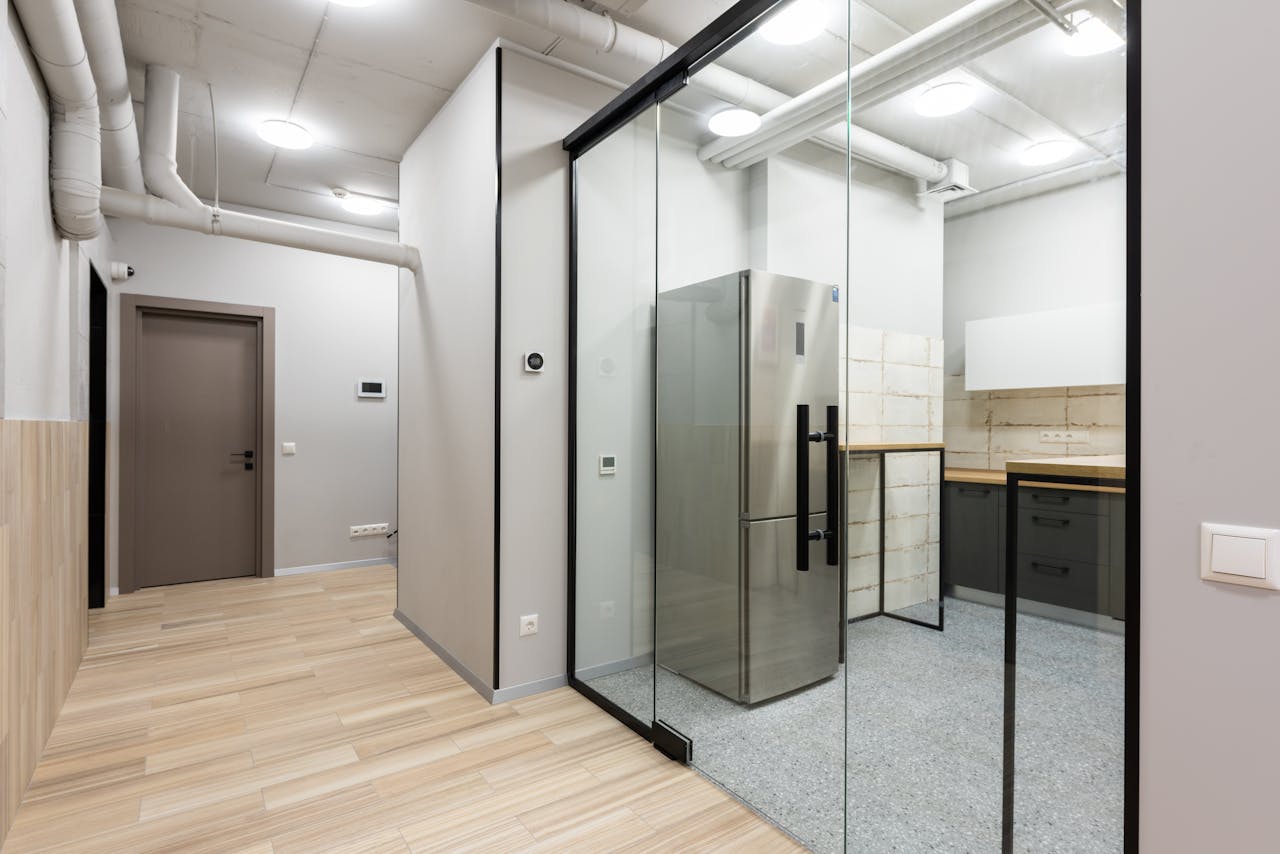
Modern office layouts focus heavily on open-concept designs, clean lines, and extensive glass partitions. While this creates a visually beautiful workspace filled with natural light, it poses a severe challenge: noise control. Conversations, ringing phones, and typing echo off hard surfaces, destroying privacy and distracting employees.
Standard glass panels offer very poor sound insulation. In meeting rooms and executive cabins, confidentiality is essential. Therefore, architects and interior designers must look beyond aesthetic transparency and focus on the science of acoustic glazing.
"Normal float glass acts like a drum skin, vibrating and transmitting sound waves with minimal resistance. Laminated glass, however, acts as a dampener, breaking the energy of sound waves as they transition between layers."
How Acoustic Laminated Glass Dampens Noise
Laminated glass is made by bonding two or more layers of glass together with a plastic interlayer, typically Polyvinyl Butyral (PVB). In acoustic applications, a specialized soft-core acoustic PVB layer is placed between the panes.
When sound waves strike standard glass, they pass through easily because the glass vibrates uniformly. When sound waves strike laminated glass, they hit the first glass pane, transition into the soft plastic core, and get absorbed. The energy is converted into trace heat, significantly reducing the sound that escapes to the other side.
The Decibel (dB) Dampening Curve
A typical 6mm standard glass panel has a Sound Transmission Class (STC) rating of around 29-30 dB. Replacing it with a 6.38mm acoustic laminated glass panel elevates the rating to 34-36 dB. Because decibels are measured on a logarithmic scale, an increase of just 3 to 5 dB reduces perceived noise levels by roughly 30% to 50%!
PVB Interlayer: The Sound Absorption Secret
The magic behind acoustic performance lies in the PVB interlayer. Standard PVB is designed primarily for safety, holding the glass pieces together if broken. Acoustic PVB, however, is formulated with a multi-layer structure where a core of soft polymer is sandwiched between two standard, stiffer outer PVB sheets.
This special sandwich structure targetedly dampens the **coincidence frequency** range (typically 1000 Hz to 3000 Hz)—the precise frequency region where human speech occurs and where standard glass performs worst. It ensures that conversations inside a conference room remain private and muffled from the outside.
Choosing the Right Glass Configuration
Depending on the noise levels of your office environment, different glass configurations are recommended:
- Standard Executive Cabins: 10mm (5mm Glass + 0.38mm PVB + 5mm Glass) laminated panels provide excellent security and sound control up to 37 dB.
- High-Privacy Conference Rooms: 12mm acoustic laminated panels combined with drop-down door seals block noise up to 39 dB.
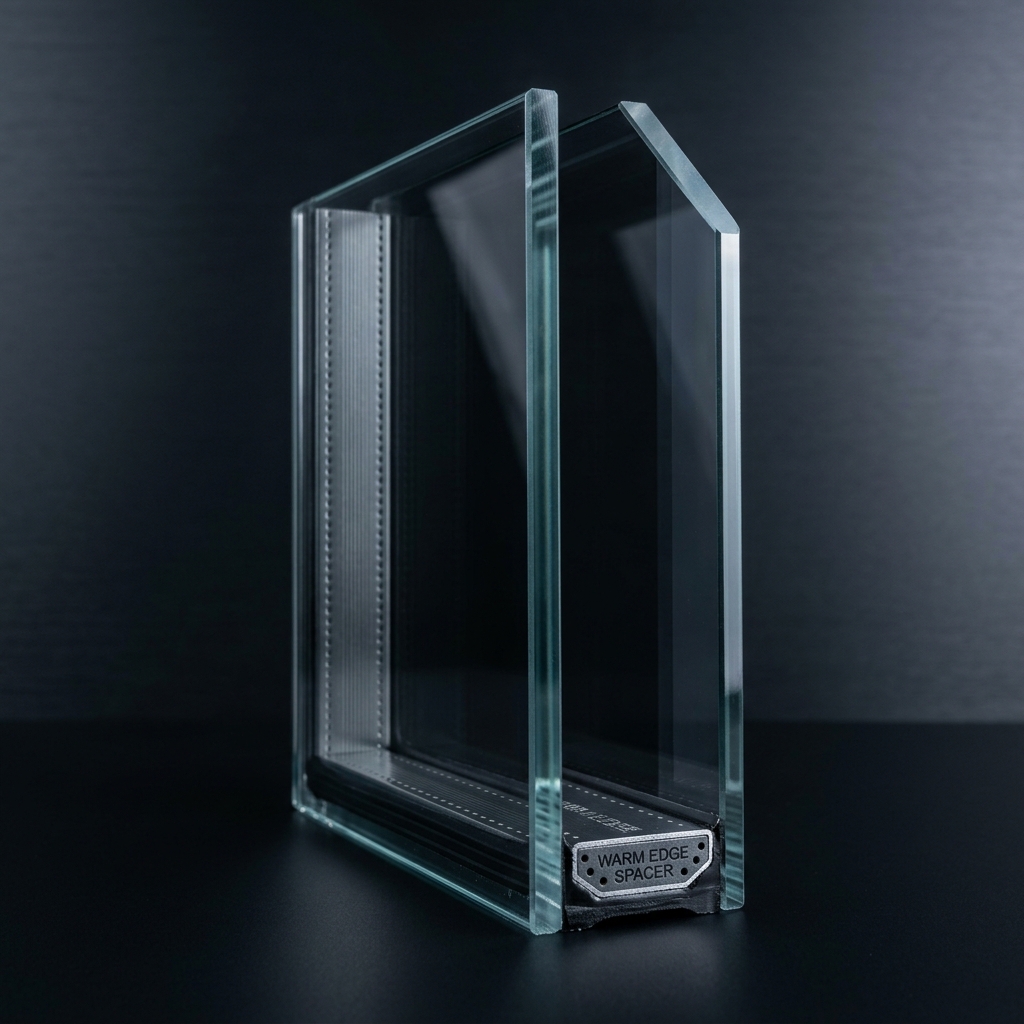
- Exterior Facade Noise control: Double Glazed Units (DGU) consisting of one laminated glass panel and one toughened panel separated by an air/argon gap offer premium insulation against heavy traffic noise.