Raipur's Extreme Summer & Thermal Load
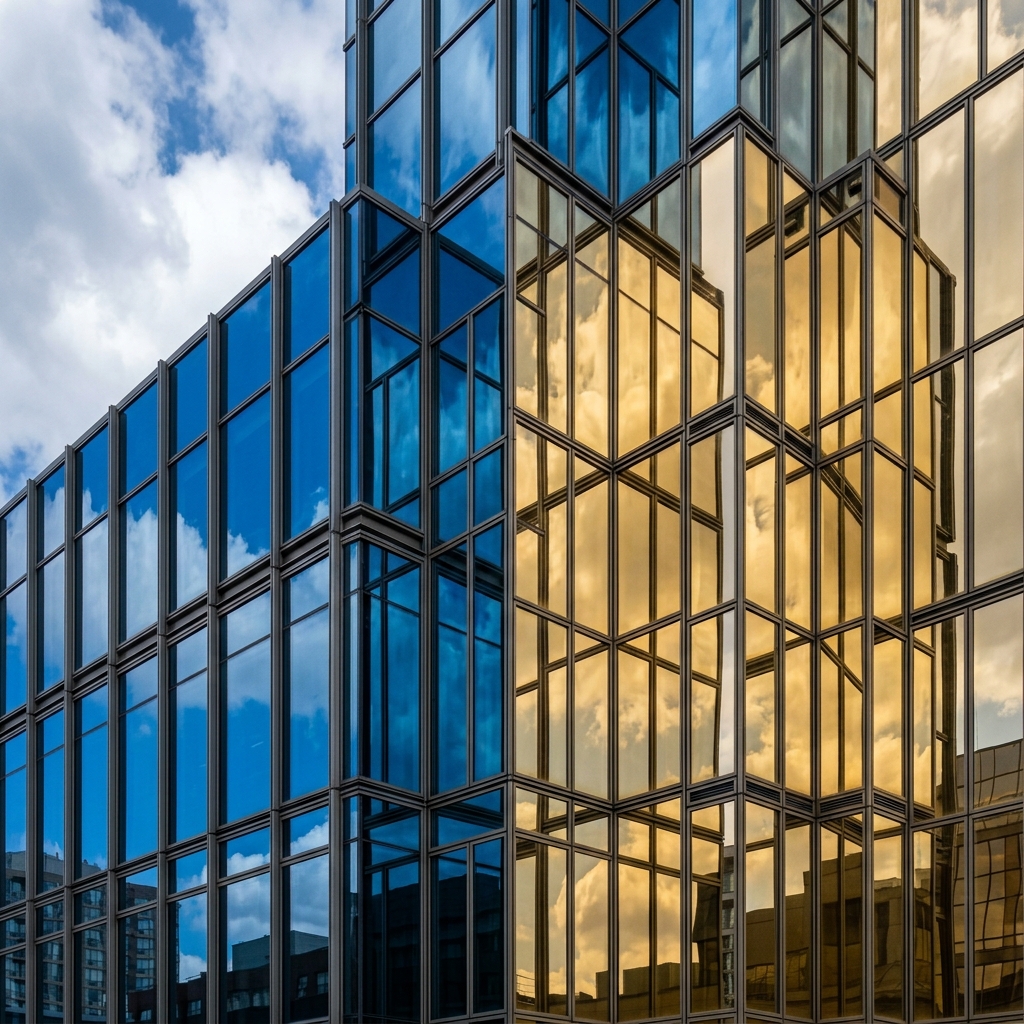
In central parts of India, summer temperatures regularly cross 45°C. For residences and commercial offices with large window expanses or structural glazing facades, this extreme outdoor heat leaks directly into the building.
Standard glass panels are excellent conductors of heat. When hot outside air heats the glass surface, it radiates that heat directly into the interiors. As a result, air conditioning units must run constantly at peak power, leading to astronomical electricity bills. Double Glazed Units (DGU) offer a scientifically proven way to block this thermal transfer.
"A single sheet of clear float glass has a U-value (thermal transmittance) of about 5.8 W/m²K. A standard Double Glazed Unit drops that value to 2.8, and with Low-E glass, it drops below 1.6, cutting heat inflow by over 70%."
Double Glazed Unit (DGU) Mechanics
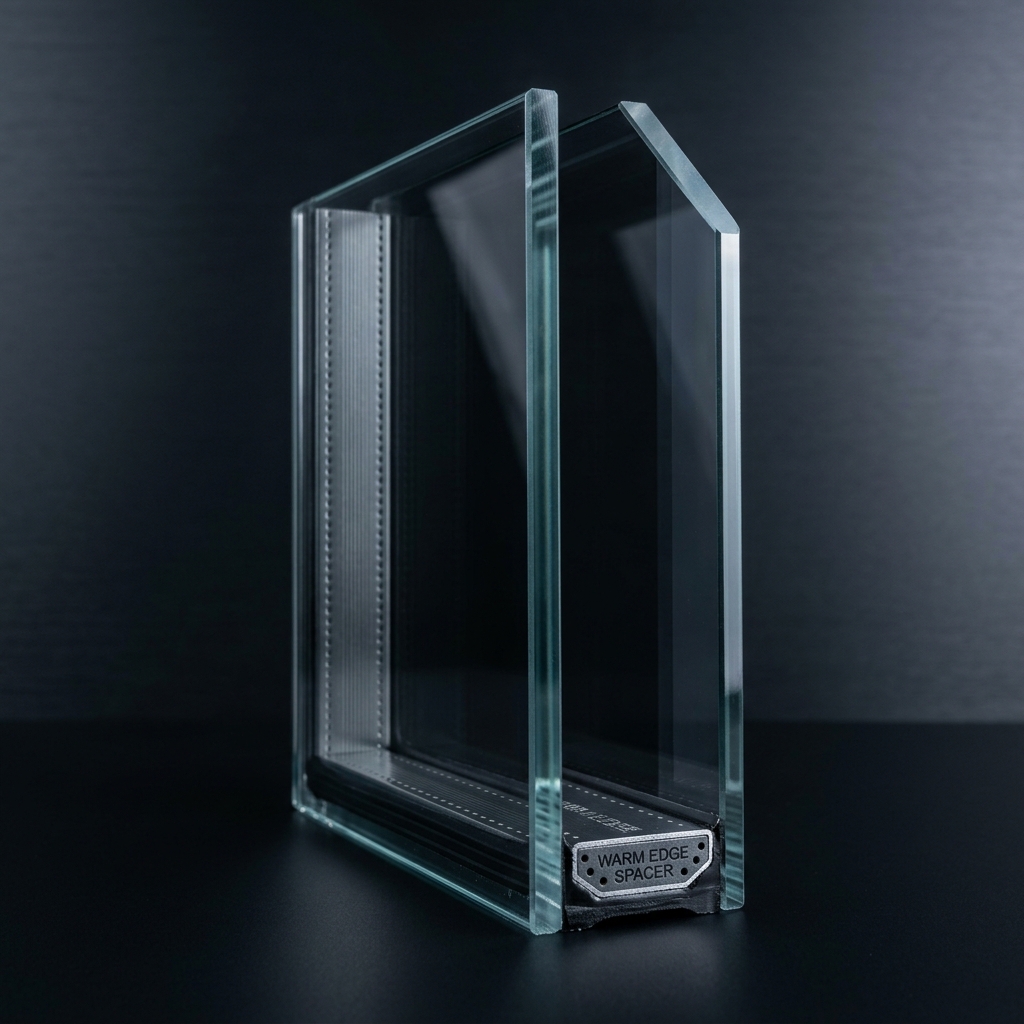
A Double Glazed Unit (often called insulated glass) consists of two glass panels separated by a spacer bar and sealed tightly to form a single, airtight unit. The spacer bar creates an insulating gap of air or gas between the panes.
Unlike solid glass, which transfers heat via conduction, the still air gap between the panes acts as a thermal break. Heat from the outer pane cannot easily jump across the air gap to reach the inner pane. This keeps the interior pane cool to the touch and significantly slows down the heating of internal rooms.
The Power of Argon Filling
To elevate insulation performance, DGU units are filled with Argon gas instead of normal air. Argon is a non-toxic, odorless inert gas that is significantly denser than air. This high density slows down the movement of heat molecules inside the gap, reducing convective thermal transfer by an additional 15% to 20%.
The Role of Argon Gas and Warm-Edge Spacers
In a premium DGU, the spacer bar is filled with active desiccant crystals that absorb any trace moisture within the cavity to prevent internal condensation and fogging over time.
Furthermore, the edges of the unit are protected by double-pass seals: a primary butyl seal for gas containment and a secondary structural sealant (silicone or polysulfide) that holds the assembly rigid. This ensures the structural integrity and gas fill last for decades.
Low-E Coating: The Solar Heat Blocker
To target solar radiation, the outer pane is typically treated with a **Low-E (Low Emissivity) coating**. This is a microscopically thin, transparent layer of metal or metal oxide applied to the glass.
Low-E coatings are highly selective: they allow visible daylight to pass through, keeping your rooms bright and clear. However, they reflect long-wave infrared heat radiation (the heat from the sun and roads) back outside. Combining Low-E glass with an argon-filled double glazing unit delivers the ultimate shield against Raipur's harsh summer, reducing AC energy consumption and returning your investment within a few seasons.