Safety Glass Classifications
When building codes or design specifications call for safety glass, the choices almost always boil down to two core candidates: **Toughened Glass** (also referred to as tempered glass) and **Laminated Glass**. Both products are engineered to prevent serious injuries during breakage, but their manufacturing methods, safety mechanics, and applications are vastly different.
Choosing the wrong glass type can result in compliance failures, safety risks, or unnecessary expenditures. Understanding their performance details is key to specifying the right glass for your project.
"Toughened glass is designed to prevent cuts by crumbling into small pebbles. Laminated glass is designed to prevent fall-through and intrusion by keeping the panel intact even when completely shattered."
Understanding Toughened Glass (Tempered)
Toughened glass is a single sheet of float glass that has gone through a rigorous thermal tempering cycle (heated to over 620°C and quenched with high-pressure air blasts). This locks the exterior surface in high compression and the interior in high tension.
This thermal engineering makes it **4 to 5 times stronger** than standard float glass of the same thickness. It can withstand high impact loads and thermal stresses. However, if an impact manages to pierce the outer compression layer, the entire panel shatters instantly into thousands of small, relatively dull granular fragments.
The Breakage Pattern Difference
When toughened glass breaks, the entire sheet falls out of the opening, leaving a clean hole. When laminated glass breaks, the glass shards remain adhered to the PVB interlayer. The pane webs and cracks like a spider's web but stays rigid inside the frame, preventing immediate security breaches or falls.
Understanding Laminated Glass (Multi-Layered)
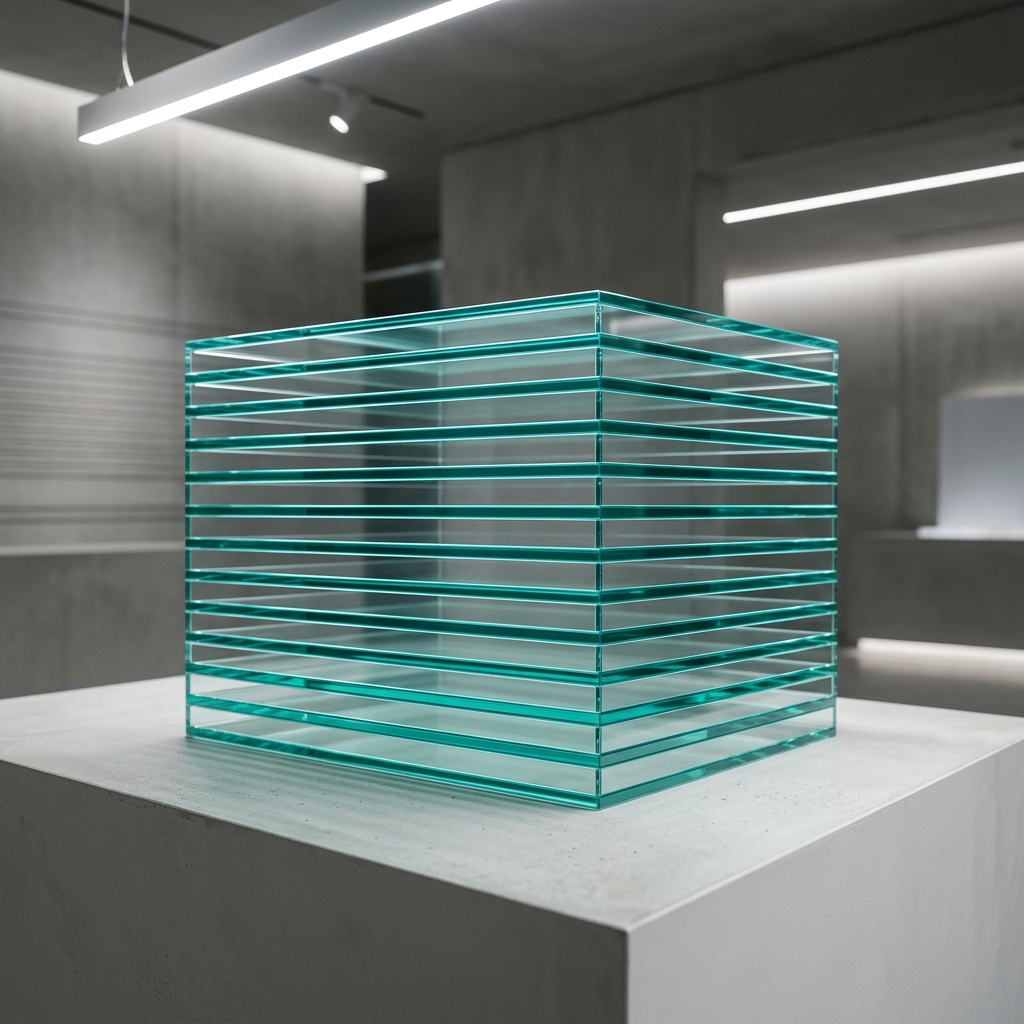
Laminated glass is a composite assembly made of two or more panes of glass joined by one or more plastic interlayers, typically Polyvinyl Butyral (PVB) or SentryGlas (SGP), under heavy heat and pressure.
The glass panes can be normal annealed float glass or toughened glass. The key feature is the PVB interlayer. If the glass breaks, the sticky plastic interlayer holds the shards together, maintaining structural cohesion. This makes laminated glass the premier choice for bullet-resistance, overhead skylights, and high-security storefronts.
Core Differences: Strength, Breakage, Security
| Feature | Toughened Glass | Laminated Glass |
|---|---|---|
| Impact Strength | Very High (4-5x stronger than standard) | Medium (depends on glass layers used) |
| Breakage Pattern | Small granular crumbs that fall out | Stays adhered to PVB interlayer |
| Forced Entry Security | Low (falls out once broken) | Exceptional (extremely difficult to penetrate) |
| Sound Insulation | Standard | Excellent (PVB absorbs sound waves) |
| Post-processing | Cannot be cut/drilled after tempering | Can be cut and processed in select formats |